Millions Underestimate the Physical and Financial Dangers of Digital Abuse, Experts Warn
Technology-facilitated abuse continues to leave lasting effects that extend far beyond digital platforms, according to a new global study released by Kaspersky. The research found that victims frequently experience psychological, social, economic, and even physical consequences, yet many remain uncertain about where to seek help or how to respond.
Conducted by Kaspersky’s internal market research center, the survey gathered responses from 7,600 participants across 19 countries. The findings highlight how online abuse increasingly influences real-world relationships, careers, education, and overall well-being.
Real-World Consequences Emerge
The study found that 79% of respondents associated tech-enabled abuse with psychological harm, including depression, trauma, and prolonged emotional stress. Meanwhile, 73% recognized social consequences such as damaged reputations and isolation from family, friends, or communities.
However, awareness declined when respondents were asked about other forms of harm. Only 55% linked technology-facilitated abuse to financial consequences, while just 51% believed it could escalate into physical danger, suggesting many people still underestimate the broader risks associated with digital abuse.
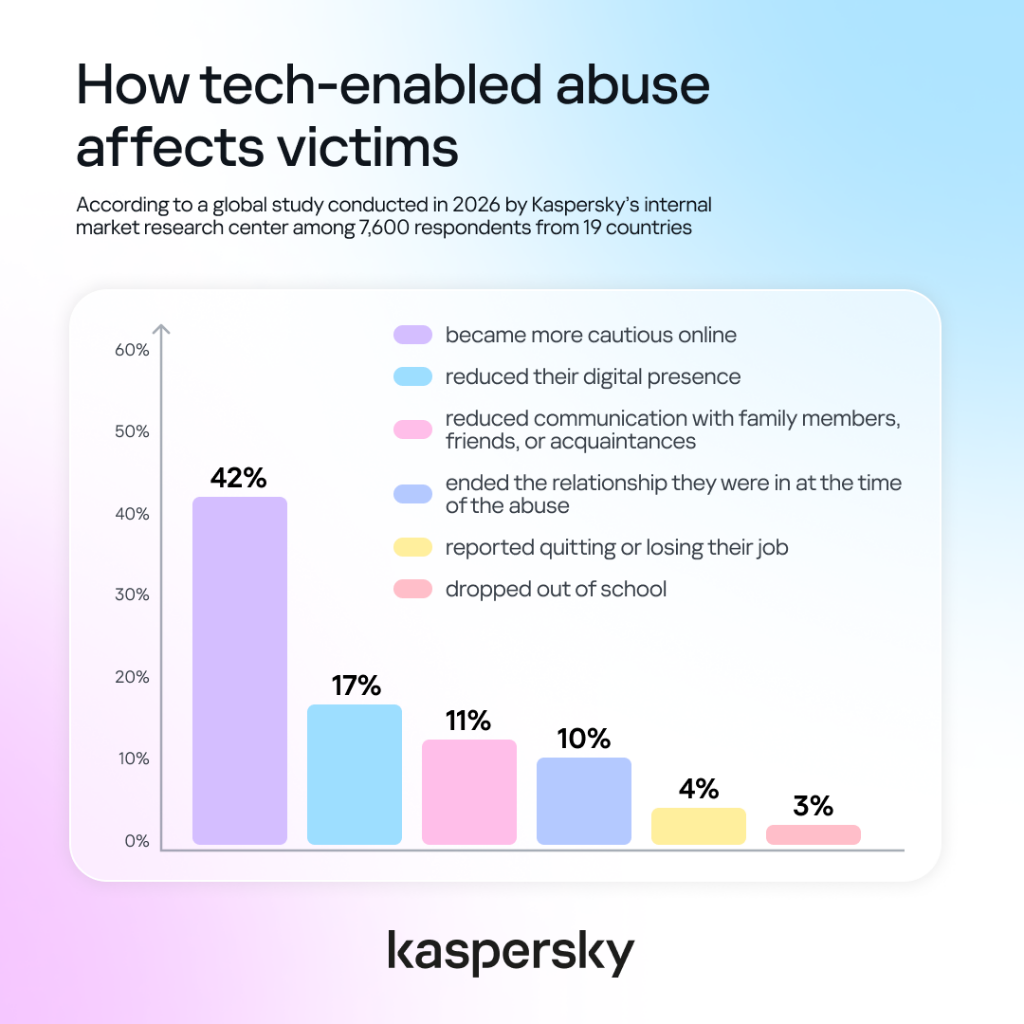
Among individuals who experienced technology-facilitated abuse, 42% reported becoming more cautious online, while 17% reduced their digital presence. The study also found that 11% limited communication with friends or family, about 10% ended personal relationships, 4% either lost or left their jobs, and 3% dropped out of school because of the abuse they experienced.
Support Gap Remains
Despite the significant impact, many victims never seek assistance. Kaspersky reported that 22% of respondents who experienced tech-enabled abuse took no action, with that figure rising to 37% among Baby Boomers.
The same hesitation was observed among witnesses. Of those who knew someone experiencing digital abuse, 12% chose not to intervene, while 32% admitted they did not know how to help and 23% were unsure whether getting involved would be appropriate.
Kaspersky Lead Security Researcher Tatyana Shishkova said the findings reveal a concerning disconnect between recognizing emotional harm and understanding the broader consequences of technology-facilitated abuse. She noted that many victims remain silent because they lack clear guidance on where to seek support rather than because they do not care about the abuse.
Dr. Leonie Maria Tanczer, Associate Professor at UCL Computer Science and Head of the Gender and Tech Research Lab, said similar patterns have emerged in cyberstalking research. She explained that many forms of digital abuse remain normalized, difficult to identify, and challenging to document, making it harder for victims to seek specialist support before situations escalate.
Kaspersky encouraged individuals to recognize the warning signs of technology-facilitated abuse, secure their digital accounts with strong passwords and two-factor authentication, review device permissions regularly, and seek help from trusted individuals or professional organizations when necessary.
The cybersecurity company also urged witnesses not to remain passive, emphasizing that checking on victims, offering guidance, and directing them toward appropriate resources can play an important role in preventing abuse from becoming normalized. Kaspersky remains a co-founder of the Coalition Against Stalkerware, an international initiative that brings together technology companies, non-government organizations, researchers, and law enforcement agencies to combat cyberstalking and support victims worldwide.