Thailand Sets Bold 2030 AI Targets for Every Industry
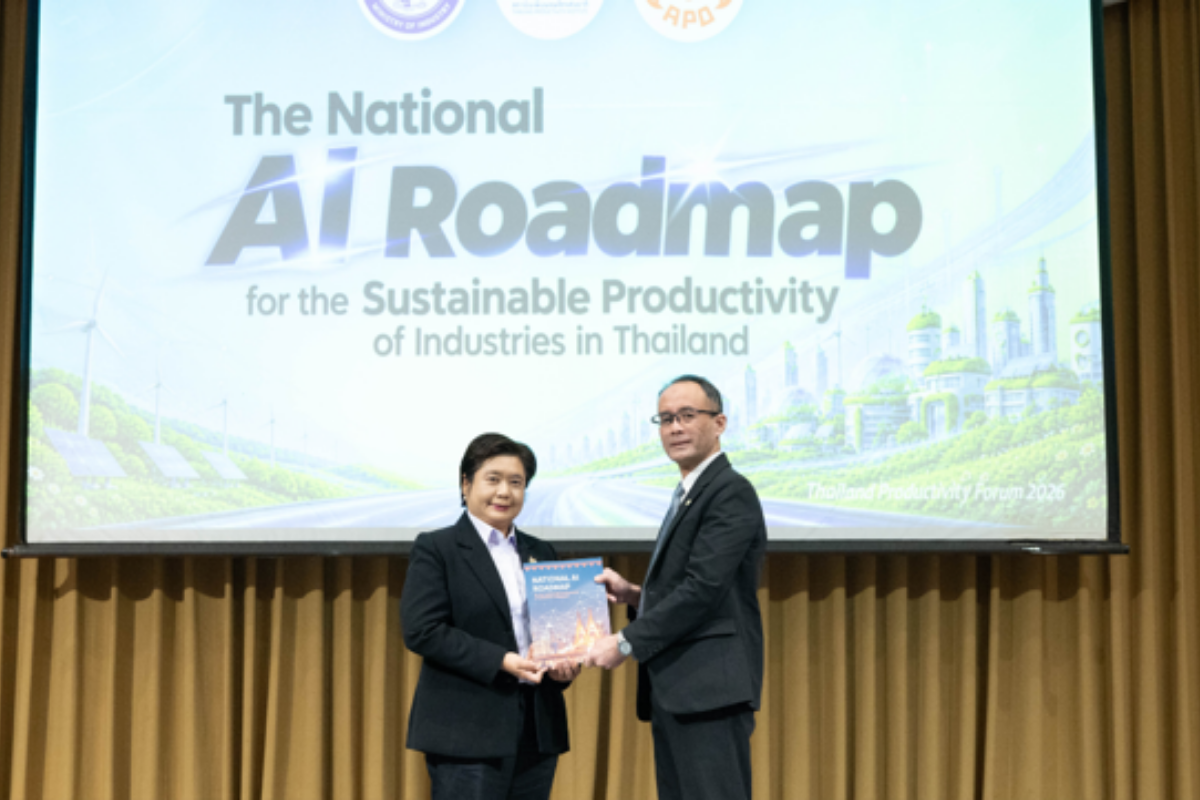
Thailand is drawing a hard line for its industries: scale up artificial intelligence within four years, or fall further behind on slipping productivity. The government unveiled its National AI Roadmap for the Sustainable Productivity of Industries on Friday, August 28.
The roadmap was handed over at the Thailand Productivity Forum 2026, themed “Twin Transformation – AI x Productivity x Net Zero.” It launched alongside the 1st AI Productivity Collaboration Consortium, signaling a coordinated national push.
Why Thailand Is Racing the Clock on AI Adoption
The urgency stems from troubling numbers. The APO Productivity Database 2025 shows Thailand’s labor-productivity growth averaged just 2.1% from 2015 to 2023, down from 4.8% in the prior five years.
An aging population is compounding the problem. With the labor force no longer expanding, Thailand needs each worker and unit of capital to generate more value.
“AI is not the objective. Productivity is,” said Dr. Indra Pradana Singawinata, Secretary-General of the Asian Productivity Organization. His remark captures the roadmap’s core philosophy.
Deputy Permanent Secretary of the Ministry of Industry Duangdow Khawjaroen echoed that framing. “Productivity represents the tangible outcomes of doing things better using fewer resources,” she said, adding that “good AI begins with good data.”
The Numbers Behind Thailand’s 2030 AI Roadmap
The roadmap rests on real groundwork. It draws on 23 stakeholder interviews, a strategy workshop, and hands-on AI training, developed jointly by the Thailand Productivity Institute and the APO.
Its targets are ambitious. The Ministry of Industry wants a 15% productivity increase across priority sectors by 2030, plus 60% AI adoption among large enterprises.
Workforce goals matter too. Officials want 80 targeted AI pilot projects, with 30% scaled into production, alongside 50,000 certified workers and 5,000 AI specialists.
Thailand already has proof it works. Midea’s Si Racha facility joined the WEF’s Global Lighthouse Network in 2025, cutting order lead times by 43% and complaints by 32%.
The bigger challenge is closing the adoption gap. A 2024 ETDA-NSTDA study found only 17.8% of firms were already using AI, while 73.3% merely planned to.