Astrolight Wins Lithuania Startup World Cup Qualifier for Global Finale
Lithuanian space and defense startup Astrolight has secured a major milestone after winning the Lithuanian regional competition of the Startup World Cup, the world’s largest startup pitch contest. The company now advances to the global finale set for November 6, 2026, in San Francisco.
At the final stage of the competition, Astrolight will compete against top startups from across the world for the title of global champion, alongside a US$1 million investment prize.
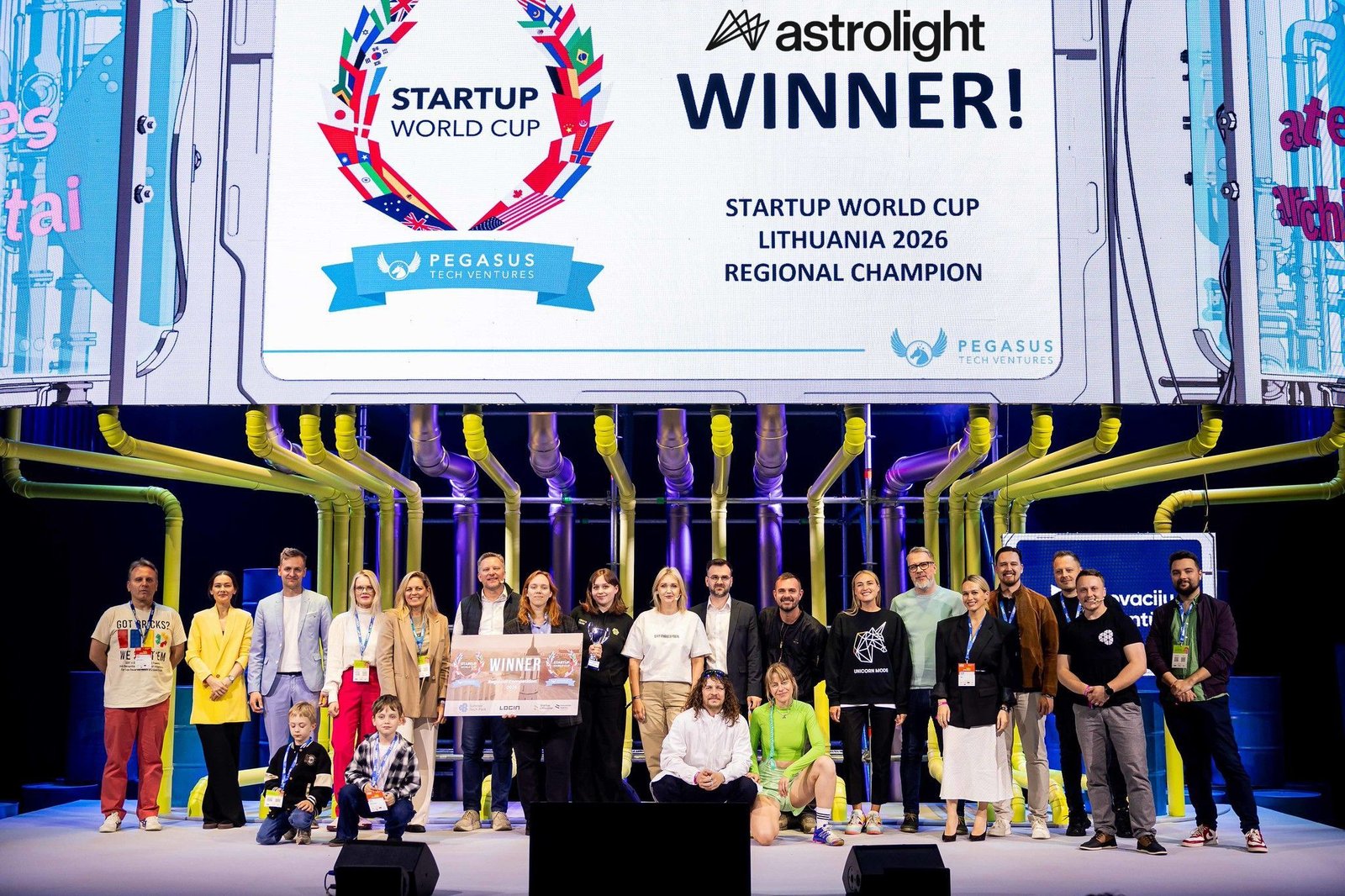
The win highlights growing international attention around the company’s work in laser communication systems designed for space, ground, and maritime use cases.
Space communications breakthrough
Astrolight has already established itself within the European space ecosystem through partnerships and contracts with the European Space Agency and multiple satellite industry players. The company has also deployed three ATLAS-1 laser terminals into orbit for testing purposes.
Its involvement extends to ESA-led initiatives, including participation in the HydRON optical multi-orbit transport network being developed alongside Kepler Communications. The startup is also working with ESA on plans to establish the first Arctic optical ground station in Greenland.
These developments position Astrolight within a rapidly expanding sector focused on high-speed optical communication systems for next-generation satellite networks.
Expanding role of laser networks
Astrolight CEO Laurynas Mačiulis said the company’s advancement to the global finale marks an important stage in its growth, as demand for space-based communication continues to rise.
He noted that laser communication is becoming increasingly important as satellite networks expand and traditional radio-frequency systems face growing limitations due to congestion, regulation, and interference.
Market research from Novaspace projects that global revenue from space laser communication terminals could reach $12.9 billion by 2035, driven by rising demand for faster and more secure data transmission systems.
The shift away from RF-based systems is also being influenced by broader infrastructure challenges, including spectrum scarcity and regulatory delays affecting satellite operators.
Astrolight argues that laser-based systems offer higher data speeds and stronger resistance to interference, making them suitable for both commercial and defense applications.
The company also points to growing geopolitical tensions and electronic warfare concerns as factors increasing demand for secure satellite communication technologies.
Incidents of GPS and satellite signal interference in various regions have highlighted vulnerabilities in existing RF-based systems, reinforcing interest in optical alternatives.
Startup World Cup organizer Pegasus Tech Ventures hosts more than 100 regional competitions worldwide, culminating in the Silicon Valley finale where global startups compete for top honors.