Kaspersky warns of surge in fake AI apps targeting users
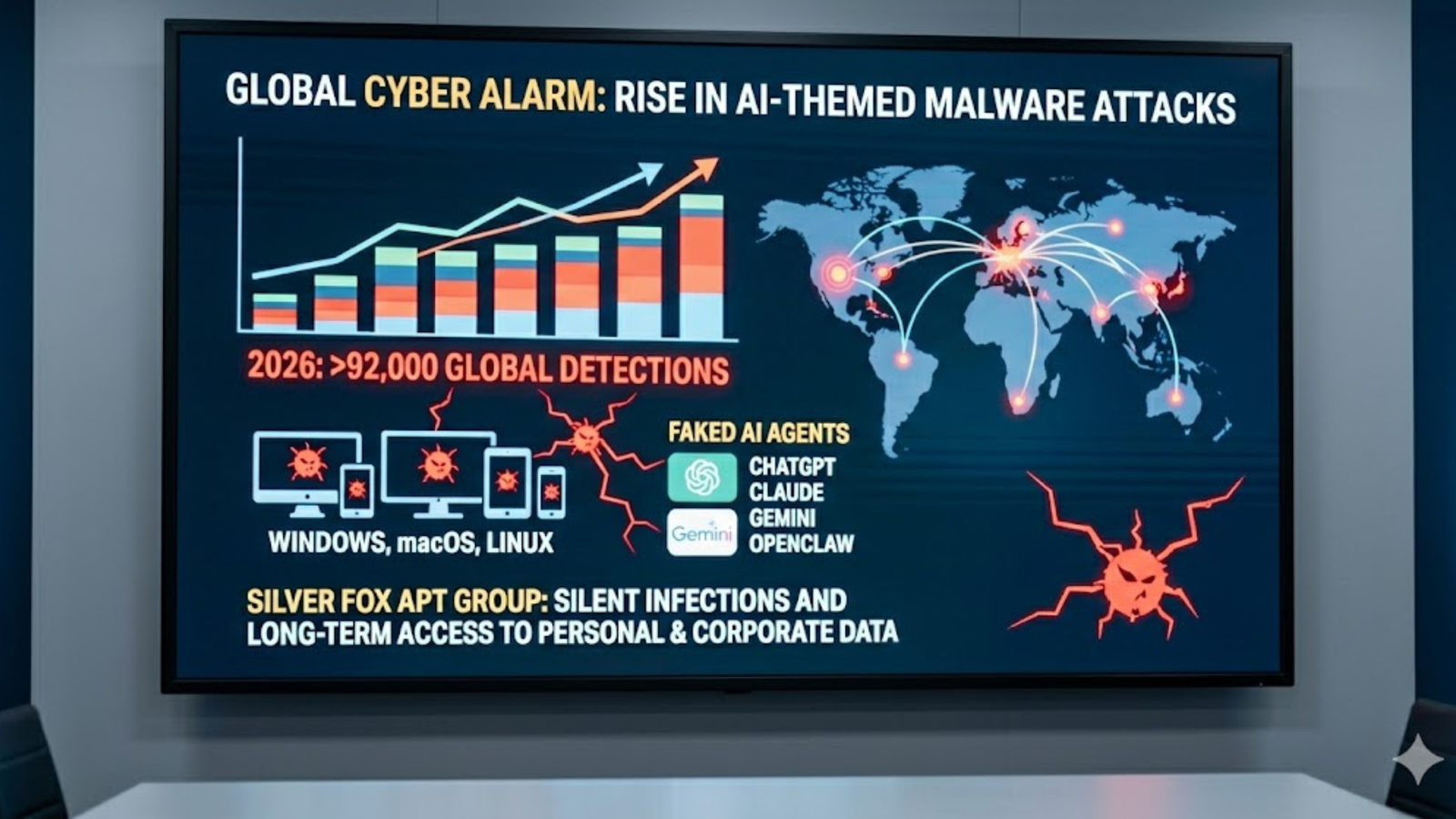
Cybercriminals are increasingly exploiting the popularity of artificial intelligence services to spread malware, with Kaspersky reporting more than 92,000 attacks disguised as AI applications and services worldwide between January and early May 2026.
According to findings presented during the Kaspersky HORIZONS conference in Rome on May 19, fake ChatGPT applications accounted for 49% of all detected attacks, while Claude and Gemini each represented 18% of the malicious campaigns uncovered during the period.
The cybersecurity company warned that attackers are taking advantage of the growing adoption of AI tools by disguising malware as legitimate software, exposing users to data theft, financial fraud, and system compromise.
Malware targets AI users
Since the start of 2026, Kaspersky researchers have identified more than 15,000 malware samples posing as agentic AI software, including counterfeit versions of emerging tools such as OpenClaw.
The malicious files included banking trojans, spyware, exploits, and malware downloaders capable of installing additional harmful software onto victims’ devices. The company noted that these threats are becoming increasingly sophisticated as cybercriminals capitalize on public demand for AI-powered services.
In May, Kaspersky’s Global Research and Analysis Team uncovered a campaign linked to the Silver Fox advanced persistent threat group. The operation distributed fake Claude AI applications across Windows, macOS, and Linux platforms, targeting users seeking access to AI services.
Once installed, the fake applications silently deployed malware that allowed attackers to maintain long-term access to infected systems and harvest sensitive information from victims.
“Users should also keep in mind that attackers are actively leveraging popular AI services as a lure to steal victims’ confidential data and funds. Taking into account the evolution of modern threat landscape, reliable security solutions are becoming an essential part of digital life,” said Dmitry Galov, Head of Russia and CIS units at Kaspersky GReAT.
Security concerns grow
Kaspersky warned that the rapid integration of AI agents into enterprise environments is changing how organizations must approach cybersecurity and digital trust.
According to the company, security can no longer focus solely on protecting devices and endpoints. Organizations must also consider how permissions, intelligence, and automated decisions move across interconnected AI-driven systems and workflows.
The cybersecurity firm recommended that businesses strengthen protection through advanced threat detection and response capabilities while ensuring security teams have access to detailed threat intelligence to identify emerging risks more effectively.
For consumers, Kaspersky advised using only AI services from reputable providers with established privacy and security records. The company also urged users to avoid anonymous or unverified AI tools that may be designed to collect personal information for phishing, fraud, blackmail, or other malicious purposes.
As cybercriminals continue adapting their tactics to exploit AI’s growing popularity, cybersecurity experts expect attacks involving fake AI applications to remain a significant threat throughout 2026.