AI Device Saves Filipino Farmer From Unneeded Loan
A farmer in Davao was about to borrow money he didn’t actually need. He was ready to take on debt to buy fertilizer for his crops, but an AI-powered soil check revealed his land still had enough nutrients to last two more months, saving him nearly half his expected expenses.
That case is exactly the kind of costly guesswork GreenVisions Ph, led by founder and CEO Engr. Lorilyn Pablo Daquioag, is trying to eliminate across Philippine agriculture. The startup’s AI-powered farm management and soil monitoring system helps farmers, local government units, and policymakers make science-based decisions in minutes instead of relying on habit and trial and error.
Farming by Guesswork Costs More Than Many Realize
Farming in the Philippines is still mostly done by observation and habit. If a crop turns yellow or a pest appears, the usual response is to apply fertilizer or chemicals right away, but according to Daquioag, that approach can be costly and inefficient.
She shared that a typical Filipino farmer may spend up to 65% of their income on production costs, with a major portion going to fertilizer, herbicide, pesticide, and labor. The problem, she said, is that these inputs are often used without first checking whether the soil actually needs them.
GreenVisions Ph’s data suggest that excessive fertilizer use is present on about 95% of the farms it has assessed. Even more alarming, Daquioag noted that only about 0.05% of farmers conduct soil testing — roughly one in every 200 — and many do it only once every three years. That gap between need and diagnosis is what GreenVisions Ph aims to close.
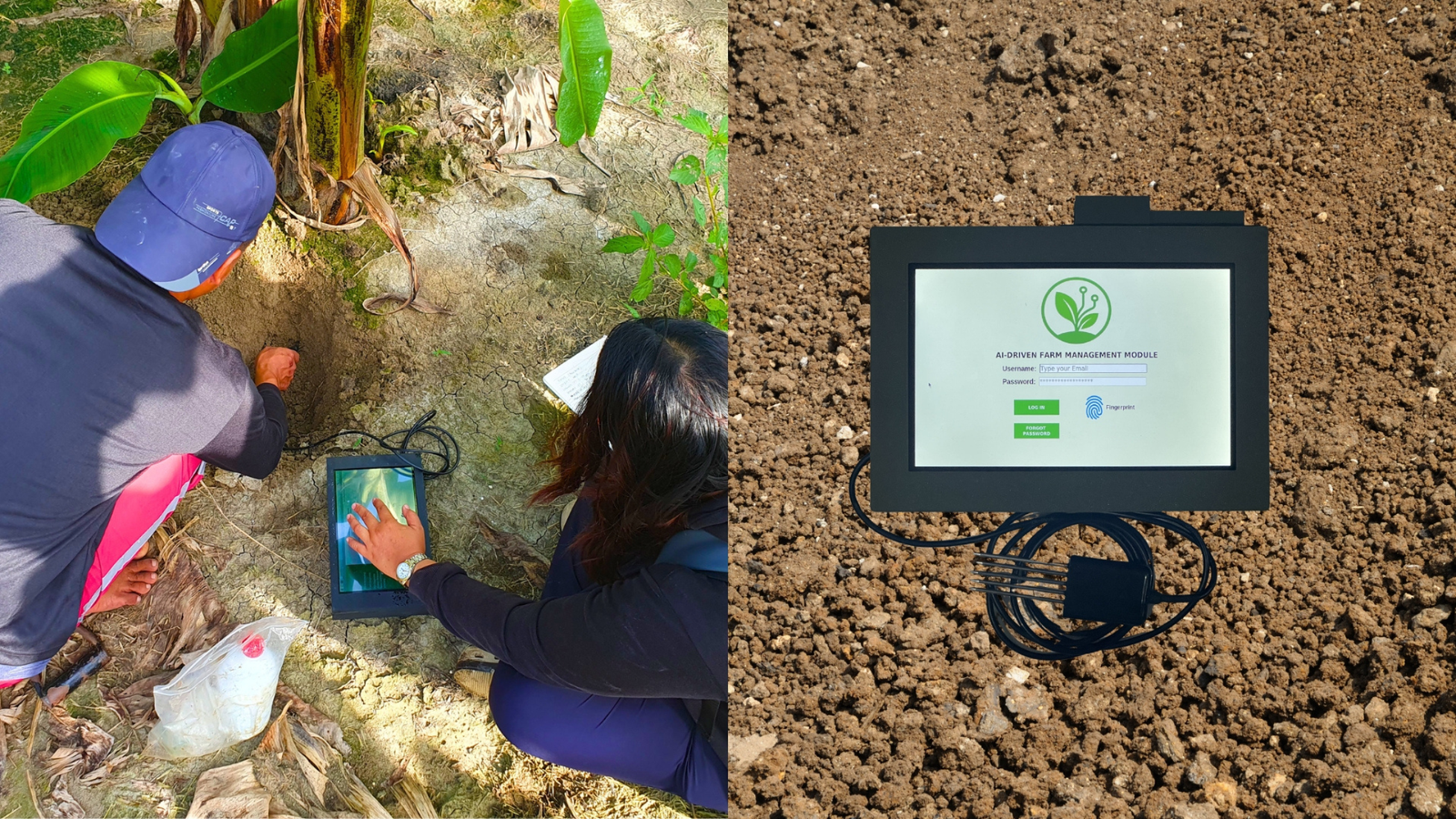
Daquioag describes the system as something like a “hospital for farms.” Instead of waiting weeks or months for lab results, farmers can bring the device directly to the field, place it in the soil, and receive recommendations in minutes. The system measures key soil indicators such as nitrogen, phosphorus, potassium, temperature, moisture, and pH, and it can work without internet access, making it practical for rural and remote areas. The device can deliver recommendations in as little as one minute, while the full reading process typically takes five to seven minutes, with results calibrated using the Bureau of Soils and Water Management method to align with traditional laboratory standards.
From One Farm to a Nationwide Push for Precision
The Davao case is far from an isolated win. Through a combination of precision farming and microbial solutions like ECAS and Trichoderma, the company says it has reduced fertilizer use by at least 30% in its more than year-long pilot program.
Daquioag stressed that farming in the Philippines is often too generalized — a solution that works in South Cotabato isn’t necessarily right for North Cotabato — which is why soil-first assessment matters. She credited the Department of Science and Technology, particularly DOST-TAPI, for supporting GreenVisions Ph’s commercialization through its Expanded Venture Financing Program, as well as its promotion through the SPICE Program, which paved the way for the startup’s participation in GITEX AI Asia 2026.
As a woman leading a startup in a male-dominated field, Daquioag sees it as a strength rather than a disadvantage. She describes GreenVisions Ph as a “zebra startup” — one that balances profit with social and environmental impact rather than chasing unicorn status.
Looking ahead, Daquioag wants the Philippines to develop its own farming standards based on local soil, crops, and conditions, rather than relying on generic benchmarks. Her broader message is simple: innovation should be affordable, usable, and grounded in the real problems farmers face — turning Philippine agriculture from guesswork into precision, one soil test at a time.