Study: EU Migration Policy Now a Diplomatic Bargaining Chip
Migration policy in the European Union isn’t being decided in Brussels back offices anymore. It’s being traded like a poker chip at the highest levels of power.
A new study finds that the EU’s landmark 2024 Migration Pact didn’t just rewrite the bloc’s asylum rules — it fundamentally changed who controls the decisions behind them, shifting power away from technical experts and into the hands of national leaders cutting political deals.

The research, published online in the JCMS: Journal of Common Market Studies on May 17, 2026, was conducted by Professor Midori Okabe of Sophia University in Japan. It offers one of the clearest looks yet at how Europe’s most contentious policy area actually gets negotiated behind closed doors, and the answer isn’t pretty for anyone hoping for technocratic order.
From Expert Coordination to Political Horse-Trading
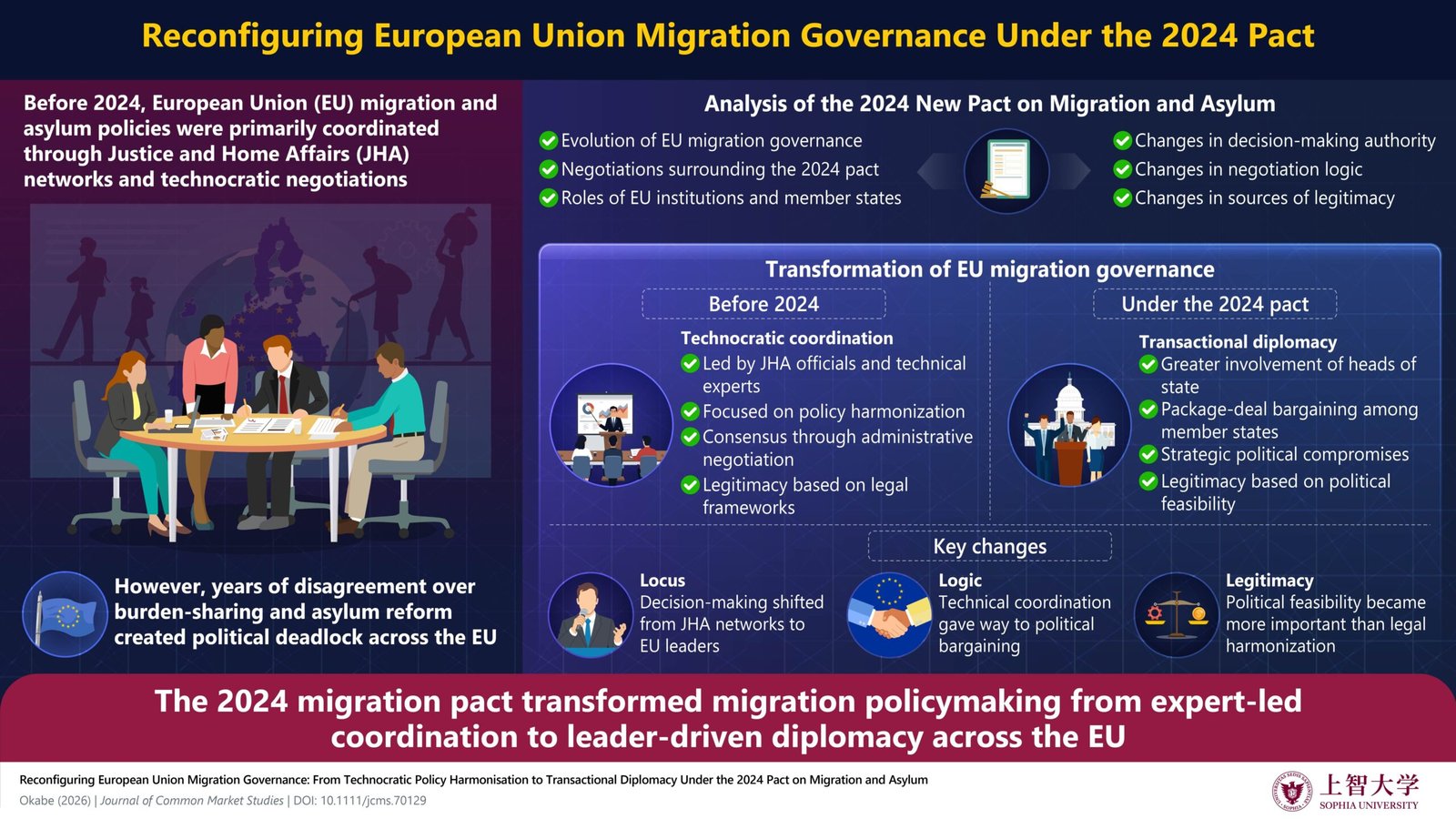
For decades, migration and asylum policy across the EU was largely hammered out by networks of Justice and Home Affairs officials, technical specialists who worked through administrative cooperation and quiet negotiation to build common ground among member states. Political leaders stepped in occasionally during crises, but the day-to-day grind of policymaking stayed with the experts.
That changed after the 2015 migration crisis exposed deep cracks in the EU’s asylum system and hardened divisions between member states, particularly over whether asylum seekers should be redistributed across the bloc. Reform efforts stalled again and again. According to Okabe’s study, the EU’s traditional coordination mechanisms simply weren’t built to break through that level of political gridlock.
To trace how the deadlock finally broke, Okabe analyzed policy documents, institutional developments and negotiation records tied to the Pact’s adoption. “I was interested in why and how the EU was able to reach an agreement on migration and asylum after years of political deadlock,” Okabe said. “The negotiation process suggested that migration governance was shaped not only by technocratic coordination, but increasingly by political bargaining among member states.”
Migration Becomes a Chip in a Bigger Diplomatic Game
The study’s central finding is stark: Decision-making power shifted away from official networks and toward high-level political forums involving heads of state and government. And those leaders weren’t just negotiating migration policy in isolation. They were bundling it with unrelated issues like border management and cooperation with non-EU countries to strike deals.
Okabe describes this pattern as “transactional diplomacy,” a form of negotiation in which political compromises are traded across multiple policy areas simultaneously to win agreement from reluctant member states. In other words, migration policy became a bargaining chip leaders could exchange for concessions elsewhere. “This study examines the structural transformation through which EU migration governance has become a central agenda of intra-EU diplomacy, shifting from technocratic coordination led by Justice and Home Affairs officials to high-level political bargaining among member states,” Okabe explained.
The implications stretch well beyond the 2024 Pact itself. As migration remains one of the most politically charged issues on the continent, future decisions may increasingly hinge on leader-to-leader negotiations rather than expert consensus, reshaping how the EU defines solidarity and responds to the next migration challenge.
Okabe’s research suggests the Pact’s true legacy may not be the specific rules it introduced, but the new model of governance it left behind — one where migration policy is negotiated, and traded, at the very top of European power.

- Reykjavik Named Europe’s Best City for Sleep as Experts Warn of Widespread Sleep Deprivation - October 20, 2026
- Future Quantum Computers Could Hijack VPN Sessions, Surfshark Warns - October 11, 2026
- Cardinals Fans Swear a Lot, Yet Rank Second-Most Positive in NFL - October 11, 2026