Skip to content
  • Facebook
  • Twitter
  • Instagram
  • YouTube
  • Vimeo
Our Daily News Online

Latest Entertainment, Sports and Technology News From Around the Globe

  • Home
    • Advertising
    • Career Opportunities
    • Press Releases
    • About Our Daily News Online
  • News
    • Business
    • PR Newswire
    • GlobeNewswire
    • Media OutReach News
    • VRI Times
  • Entertainment
    • Movies
    • Television
  • Lifestyles
    • Arts and Crafts
    • Automotive
    • Food
    • Health
  • Sports
    • Basketball
      • NBA
      • PBA
    • Football
    • Golf
    • Tennis
    • Esports
  • Technology
    • Gaming
    • Reviews
  • Fiction
    • Heartstrings & Storylines
      • The Silent Love of Johnny and Margaret
    • Horror stories
      • The Thousand-Eyed Mask
  • Home
  • 2026
  • September
  • 23
  • Mule Accounts Threaten to Drain 3% of PH’s Entire GDP

Mule Accounts Threaten to Drain 3% of PH’s Entire GDP

  • ODN Staff
  • September 23, 2026
  • Business
0Shares

Nearly 3% of the Philippine economy could vanish into a web of fake bank accounts. A new joint whitepaper warns the country risks losing roughly PHP 603 billion a year to illicit mule account networks.

The study, from IDfy Philippines and CIBI Information, Inc., says the losses will keep mounting without stronger identity safeguards in place.

The report, titled “Mule Hunting: Are We Chasing Ghosts?,” analyzed transaction data from the Bangko Sentral ng Pilipinas. It found that PESONet and InstaPay carried a combined PHP 24.74 trillion in transaction flows in 2025.
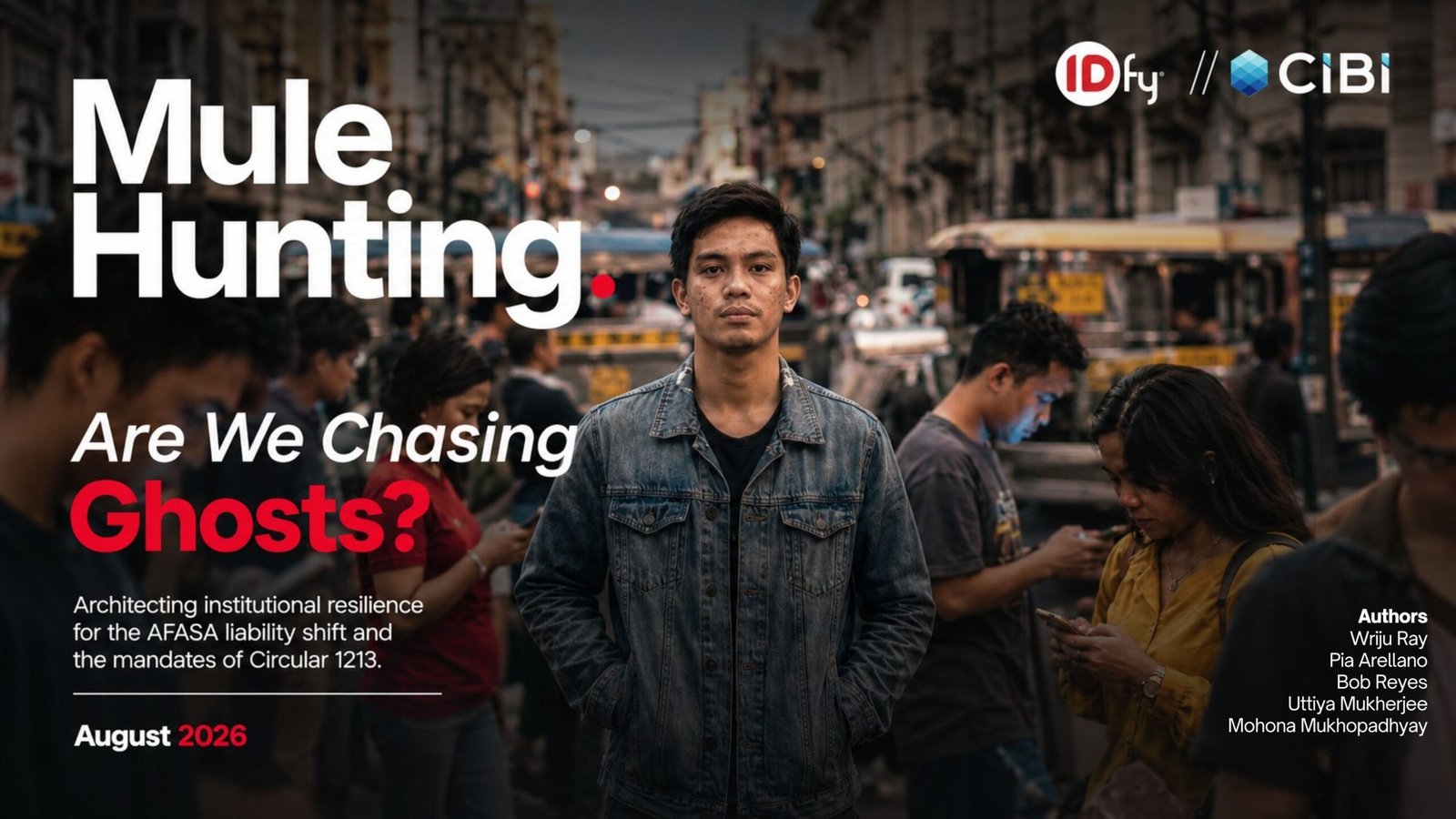
Philippine mule account fraud could expose the economy to an estimated PHP 603 billion in annual losses, according to a new joint whitepaper.

Of that total, about PHP 1.088 trillion in transactions was flagged as at risk of digital fraud. The whitepaper noted that 55.4% of that risk stems directly from authorized push payment scams and account takeovers that rely on mule accounts to move stolen cash.

How the Philippines’ Digital Payment Boom Fueled Mule Account Fraud

The vulnerability traces back to how fast the Philippines went digital. The country blew past its target to digitize 50% of retail payments three years ahead of schedule, hitting 52.8% in 2023.

That rapid shift, however, opened a gap that transnational syndicates have been quick to exploit. Weak identity checks made it easier for fraud networks to slip mule accounts into the formal banking system.

The scale of the problem is likely underreported. Official cybercrime reporting remains under 2%, even though Cybercrime Investigation and Coordinating Center data shows 34% of Filipinos have suffered financial scam losses.

Most victims never file formal complaints because of small transaction values and legal complexity. That gap lets weaponized mule accounts stay active and appear clean for months at a time.

The whitepaper estimates 60% to 70% of mule accounts involve voluntary participation. National Bureau of Investigation data points to a “mule-for-hire” market where verified accounts are bulk-purchased for PHP 500 to PHP 5,000.

Related Post:  Asian Productivity Organization Returns to Manila With a Plan to Turn Productivity Into Prosperity

The remaining 30% to 40% of mule accounts are coerced through sophisticated schemes. These include romance-investment fraud and fake remote job scams targeting vulnerable Filipinos.

New AFASA Law Shifts Fraud Liability Onto Philippine Banks

Regulatory pressure is mounting fast. The Anti-Financial Account Scamming Act and BSP Circular 1213 shift liability for fraud losses away from consumers and onto financial institutions.

Under the new rules, institutions that fail to deploy real-time fraud management systems face full, unlimited reimbursement liability for customer losses. The circular also restricts SMS and email one-time passwords to initial account setups.

That means banks can no longer rely on OTPs for high-risk actions like fund transfers, payee additions, and credential changes. Regulators are urging stronger alternatives instead.

Institutions are being pushed toward server-side biometrics, cryptographic device binding, and real-time AI behavioral risk scoring. Together, those tools are meant to replace easily intercepted OTP codes.

“Clinging to interceptable OTPs is no longer just legacy technology; under AFASA, it is a direct financial liability for institutions,” said Raghuraman Chandrashekhar, country head of IDfy Philippines. “No single institution can close this gap alone.”

Chandrashekhar added that the fix lies in combining multiple layers of defense at once. “What works is layering device intelligence, real-time AI transaction monitoring, and biometric verification into a unified defense stack,” he said.

Industry experts stressed that no single safeguard will be enough on its own. Systems like Fraud Intelligence Data Sharing, AI-driven transaction monitoring, and server-side facial authentication need to work in unison.

Under the AFASA framework, those tools are meant to bind together into one defense mechanism. The goal is an end-to-end system that mule networks cannot easily bypass.


0Shares

Share this:

  • Share on Facebook (Opens in new window) Facebook
  • Share on X (Opens in new window) X

Post navigation

Prev
Next
Asian Productivity Organization Returns to Manila With a Plan to Turn Productivity Into Prosperity
  • Business
  • News

Asian Productivity Organization Returns to Manila With a Plan to Turn Productivity Into Prosperity

  • ODN Staff
  • October 25, 2026
  • 0
NBA Taps Milo, Nescau, Nesquik in Multi-Year Global Power Play
  • Business
  • Sports

NBA Taps Milo, Nescau, Nesquik in Multi-Year Global Power Play

  • ODN Staff
  • October 10, 2026
Inside the Final Steps Before a Part Ships Out
  • Business

Inside the Final Steps Before a Part Ships Out

  • Staff Writer
  • October 6, 2026
Inside the Mystery Trading Firm Run by Two Mathletes Betting Big on the Future
  • Business

Inside the Mystery Trading Firm Run by Two Mathletes Betting Big on the Future

  • Brian Joseph Yalung
  • October 4, 2026

Recent Posts

  • Building a Tranquil Garden for Your Virginia Home
  • From Housing to Higher Income: SHFC Partners With TESDA to Train Filipino Families
  • Japanese Rock Trio karanoah Turns Rain-Soaked Memories Into New Single ‘Aini’
  • Space Invaders, Arkanoid and More Return in TAITO’s New Retro Gaming Collection
  • Epiphone Reimagines Five Iconic Guitars for Modern Metal With All-New Prophecy Series

RSS feed: APOC Wire APOC Wire

  • Kilyawan Farm Resort in Batangas Named Architecture Honoree at the NCCA Haligi ng Dangal Awards 2026
  • LPIXEL Partners with VNPT-IT to Provide Medical Imaging Diagnostic Support AI “EIRL” in Vietnam
  • OKINAWA HARBORVIEW HOTEL completes full-scale renovation to deliver a modern Okinawan experience
  • Huis Ten Bosch's Winter Is Reimagined! 'The Starlight Million' & 'European Holy Christmas'
  • Japan Travel: povo Expands Data Oasis to 83 Stations for Japan SIM Users Collaborated with Welcome Suica Mobile

RSS feed: VRI Times VRI Times

  • TradingPRO Launches a Free Learning Hub for Traders at Every Level
  • Is AI Making Employees More Productive but Less Mentally Healthy? PVP Raises Workplace Concerns
  • Miranalla Farm to Host Hands-On Earthbag Building Workshop in Bohol This November
  • Oneberry Technologies and SEA.AI Announce Strategic Collaboration to Advance Maritime Security Solutions Across Southeast Asia
  • As Holiday Anxiety Peaks, Two Students Find Steadier Sleep Through Traditional Yoga in Taytay

RSS feed: Sports Bytes PH Sports Bytes PH

  • Team Philippines’ Dakar Journey Begins With Long Flights and Big Olympic Dreams
  • Galanza Leads Creamline Past Capital1’s Comeback Scare to Claim Solo PVL Lead
  • Davison Powers PLDT Past ZUS Coffee as High Speed Hitters Regain Their Bite
  • NLEX Survives Phoenix Shootout as Alapag’s Road Warriors Close In on Final Four
  • Hollis-Jefferson Delivers Masterclass as TNT Seizes Control of Magnolia Series

SiteLock

Our Daily News Online