Trump Administration Barred From Jailing Americans for Sharing Evidence With International Criminal Court
A federal court has barred the Trump administration from jailing Americans who share evidence with the International Criminal Court (ICC). The Nov. 23 ruling is the first to protect all Americans, the plaintiffs say, not just those who sued.
Americans faced up to 20 years in prison and $1 million in civil fines for providing “services” to sanctioned parties under Executive Order 14203. The ruling shields work with sanctioned Palestinian groups and UN expert Francesca Albanese, the plaintiffs said.
The suit was brought by Democracy for the Arab World Now (DAWN) and Taxpayers Alliance Against Genocide (TAAG). The government can appeal, and the injunction covers only speech-based services.
ICC Sanctions Ruling: What Changes Now
DAWN and TAAG said they will immediately resume ICC work and collaboration with Albanese and the sanctioned Palestinian groups. Many U.S. groups, they said, had halted ICC advocacy and cut ties under the threat of prosecution.
Omar Shakir, DAWN’s executive director, called it a landmark ruling that dismantles a core part of the sanctions regime. TAAG’s Anna Marie Stenberg said it means others can now challenge the order without fear of punishment.
The Palestinian groups are Al-Haq, al-Mezan and the Palestinian Center for Human Rights (PCHR). They were sanctioned alongside ICC prosecutors, judges and Albanese, and the ruling lifts none of those penalties.
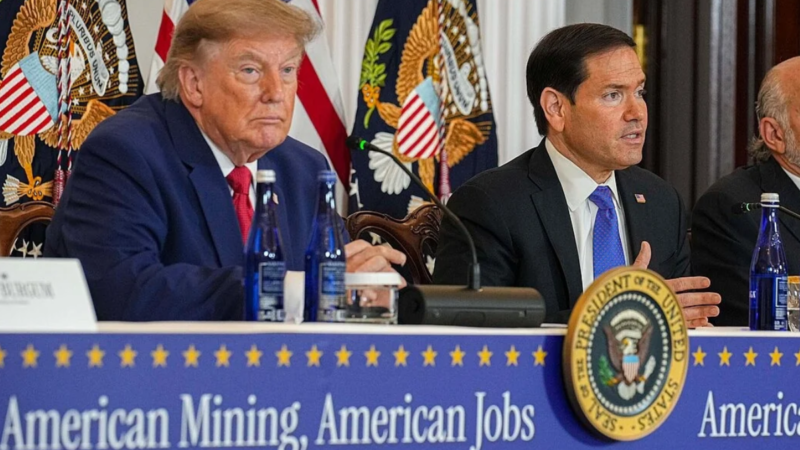
On Nov. 11, TAAG held a press conference in The Hague and delivered evidence to the ICC, the type of sharing at the heart of this case. The group requested arrest warrants for President Donald Trump, Secretary of State Marco Rubio and other U.S. officials.
TAAG alleges the officials aided and abetted genocide in Gaza, claims that remain unproven. DAWN will hold its own press conference in The Hague on Dec. 1 as ICC member states meet there under what the groups call a U.S. ultimatum.
How the Court Reached Its Ruling
Executive Order 14203, issued in February 2025, lets officials sanction foreigners who support ICC probes of U.S. and Israeli nationals. It also made it a federal offense to give or receive “services” from sanctioned parties, with up to 20 years in prison.
The plaintiffs argued “services” can be read to cover anything that benefits the recipient, putting Americans at risk for submitting evidence or engaging in joint advocacy. The ruling blocks enforcement against speech-based services.
The suit was filed July 15, 2026, two days after Rubio again threatened to dismantle the ICC, including in a July 13 Wall Street Journal op-ed. The administration escalated Oct. 9, 2026, by sanctioning the Court itself.
Judge Jesse M. Furman of the U.S. District Court for the Southern District of New York ruled on Oct. 13 that the ban likely violates the First Amendment because it regulates speech based on its content. That order protected only DAWN and TAAG.
The government argued that Trump v. CASA, the Supreme Court’s 2025 ruling limiting universal injunctions, barred relief for nonparties. On Nov. 23, the court disagreed, saying the ban “may not be enforced against anyone.”
Attorney Joseph Pace, who represents DAWN and TAAG, called it a major victory because it bars the administration from penalizing anyone nationwide for exercising First Amendment rights. Courts, he said, now typically can offer relief only to plaintiffs.