Global Crime Networks Generate $870 Billion a Year as Police Leaders Warn of Growing Threats
Transnational organized crime generates more than $870 billion a year, about 1.5% of global GDP, according to United Nations Office on Drugs and Crime (UNODC) estimates. Police leaders at the World Police Summit in Dubai warned the threat is growing.
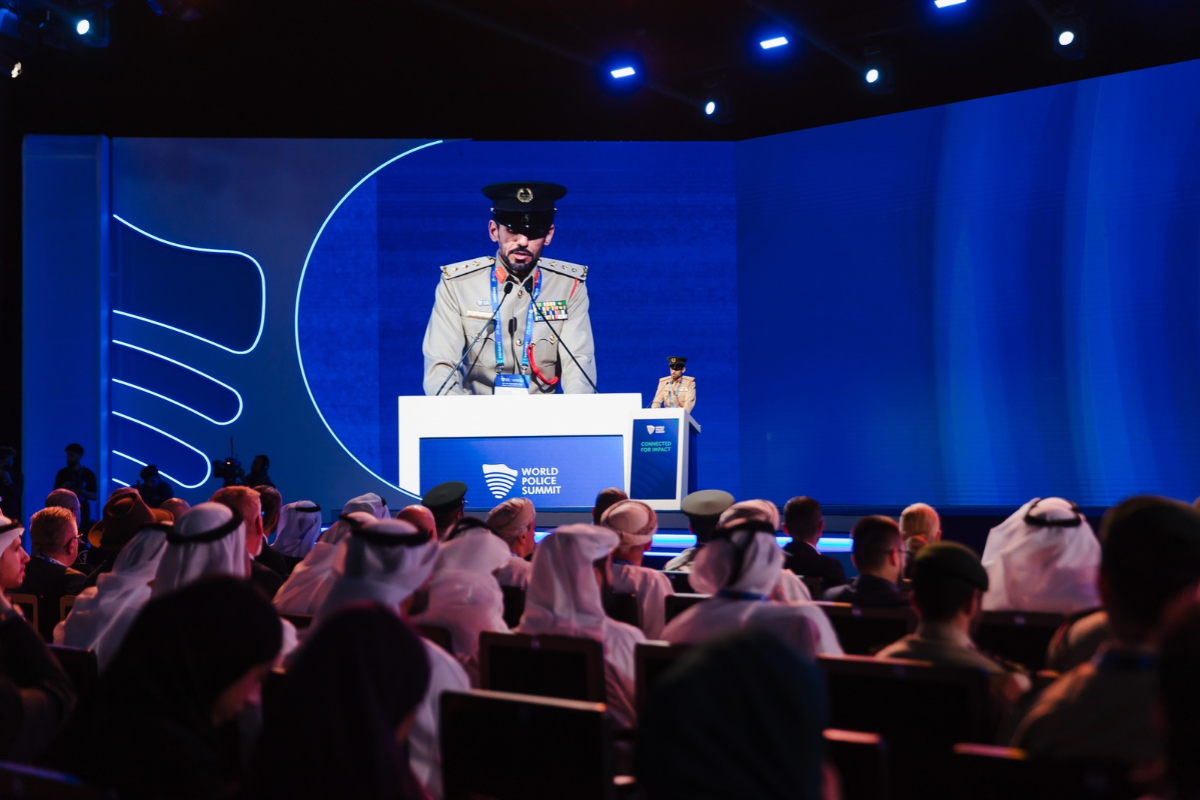
Col. Dr. Rashid Hamdan Al Ghafri cited the estimates at the fifth World Police Summit, which runs through Wednesday, Nov. 18, at the Dubai World Trade Centre. He said transnational criminal networks increasingly operate like sophisticated businesses.
They exploit legal loopholes, encrypted applications and emerging technologies to expand, he said. Al Ghafri also cited estimates that the global annual cost of cybercrime could exceed $10.5 trillion.
Officials Urge Proactive Crime Prevention
Al Ghafri, chairman of the World Police Summit Secretariat, called for a shift from reactive investigations to proactive prevention. He also urged real-time intelligence sharing and greater integration between security systems across borders.
Dr. Hatem Aly, the UNODC’s regional representative for the GCC region, said drug trafficking, human trafficking and cybercrime are increasingly linked to money laundering networks. Those networks, he said, are designed to conceal illicit proceeds.
Aly said no country or police organization can address today’s threats alone. Fighting money laundering and illicit financial flows also requires banks, the private sector and society, he said.
Stephen Nutt, assistant commissioner of the Australian Federal Police (AFP), said encryption, cryptocurrencies and artificial intelligence have fundamentally changed the nature of crime. He urged police to adapt quickly and work with the private sector.
Dr. Najat Maalla M’jid, the U.N. special representative of the secretary-general on violence against children, said global crises have raised the risks facing millions of children. Violence, trafficking and sexual exploitation are chief among them, she said.
She also warned that criminal networks are exploiting technology, legal gaps and weak international coordination to target children online. She called for stronger intelligence sharing and international cooperation.
Global Cooperation Targets Criminal Networks
Panče Toshkovski, North Macedonia’s interior minister, said no country can guarantee its security independently of others. He cited a recent operation in which police intelligence from North Macedonia helped French authorities seize 68 kilograms of cocaine.
Stephen Fry, executive director of investigation support at INTERPOL, cited a fraud attempt against a Singapore company. Criminals impersonated a supplier and tried to steal millions of dollars, but cooperation between Singapore and Oman stopped the transfer.
Fry outlined two INTERPOL initiatives. The Silver Notice lets countries request information about funds and assets linked to crime, while a new joint task force model brings together officers and experts from several member countries.
Fry said combining the two can help disrupt illicit financing and dismantle companies and structures used by criminal networks. He pointed to tracing assets, seizing illegal substances, apprehending offenders and protecting victims as practical outcomes.
Nutt said the AFP has more than 200 personnel across 36 overseas locations. He cited Operation Ironside, in which authorities exploited an encrypted platform used by criminal networks, as an example of what coordinated action can achieve.
Closing his address, Al Ghafri urged participants to turn international partnerships into tangible outcomes. He said the safety and freedom of future generations depend on the courage, unity and cooperation of today’s police institutions.