All the Ways Tire Pressure Affects Your Car
Tires are the only parts of a car that maintain direct contact with the road, which makes their condition critical to how a vehicle behaves. While tread depth and tire damage deserve attention, air pressure also has a major influence on everyday driving.
A difference of several pounds per square inch can change how a tire flexes, meets the road, and responds to steering input. Incorrect pressure can also affect fuel consumption and shorten tire life. Keep reading to understand all the ways tire pressure affects your car.
Tire Pressure Changes How Your Car Handles
A tire needs enough air to support the vehicle while remaining flexible enough to maintain useful contact with the road. When inflation falls outside the vehicle manufacturer’s recommended range, that balance changes.
An underinflated tire flexes more as it rolls. That extra movement can make steering feel loose, particularly when changing lanes or navigating curves. Drivers may notice that the car takes slightly longer to respond after they turn the steering wheel.
Too much pressure creates a different effect. An overinflated tire becomes stiffer and may have less ability to conform to irregular pavement. The vehicle can feel sharper at the steering wheel, but that sensation does not necessarily mean the tires have better grip.
Cornering Can Feel Less Predictable
Turning places different forces on a tire than driving in a straight line. As a car enters a curve, weight shifts, the tire sidewalls flex, and the contact patches must continue providing grip.
Tire pressure affects cornering stability because low pressure increases sidewall movement. That can create a softer or delayed response as the vehicle changes direction. Excess pressure may reduce a tire’s ability to remain composed over bumps, pavement seams, or other imperfections encountered during a turn.
The effects may become easier to notice on familiar roads. A highway ramp or sweeping curve that normally feels predictable may suddenly require more steering correction when a tire loses pressure.
Inflation Can Affect Braking
Braking performance is another way tire pressure affects your car. Your vehicle’s brakes depend partly on how effectively the tires interact with the road. Incorrect inflation alters the tire’s shape and can change that interaction.
Significant underinflation can reduce a tire’s lateral traction and contribute to longer stopping distances, particularly under challenging conditions. Excessive inflation can also reduce the tire’s ability to conform to the road surface.
Tire pressure does not work alone. Tread condition, road surface, weather, vehicle speed, and brake condition all influence stopping performance.
Low Pressure Increases Rolling Resistance
Every tire deforms slightly as it rolls. When a tire lacks sufficient air, it flexes more and requires additional energy to keep moving. This means the tire has a greater rolling resistance.
The higher the rolling resistance of a tire, the lower the fuel economy for the vehicle. The difference from a single trip may seem minor. Over months of commuting, errands, and longer drives, however, consistently low pressure can result in wasted energy and higher operating costs.
Incorrect Pressure Changes Tire Wear
Inflation also influences how forces spread across the tread.
When pressure remains too low, the tire can place greater stress on the outer portions of its tread and sidewalls. Excessive flex also creates heat inside the tire, which can accelerate deterioration and raise the risk of tire damage.
Overinflation can place greater loading toward the center of the tread. Over time, this may contribute to uneven wear and reduce the useful life of the tire.
Wear patterns can have other causes, including alignment problems, worn suspension components, or improper balancing. Drivers who see unusual tread wear should bring it in for a professional tire inspection to locate the source.
Tire Pressure Influences Ride Comfort
Tires provide part of a vehicle’s cushioning between the road and the cabin. Their air volume and sidewall flexibility help absorb small bumps before the suspension handles the remaining movement.
Overinflated tires tend to feel firmer because they cannot flex as readily. Rough pavement, cracks, and expansion joints may become more noticeable inside the vehicle.
Underinflated tires can create a softer sensation, but that does not make low pressure a safe way to improve ride comfort. Excessive sidewall movement can reduce steering precision, increase heat generation, and accelerate tire wear.
Temperature Can Change Your Readings
Tire pressure changes with temperature. As the air inside a tire gets colder, its pressure decreases. As it warms, pressure rises.
That means a tire with a correct pressure reading during warmer weather may show a lower reading after a substantial temperature drop. Driving also heats the tires, so measurements taken immediately after a long trip may be higher than readings taken before the vehicle moves.
For the most useful comparison, check pressure when the tires are cold. Seasonal temperature swings make routine checks especially useful. Drivers should not wait for a visibly soft tire before using a gauge.
The TPMS Light Is Not a Replacement for a Gauge
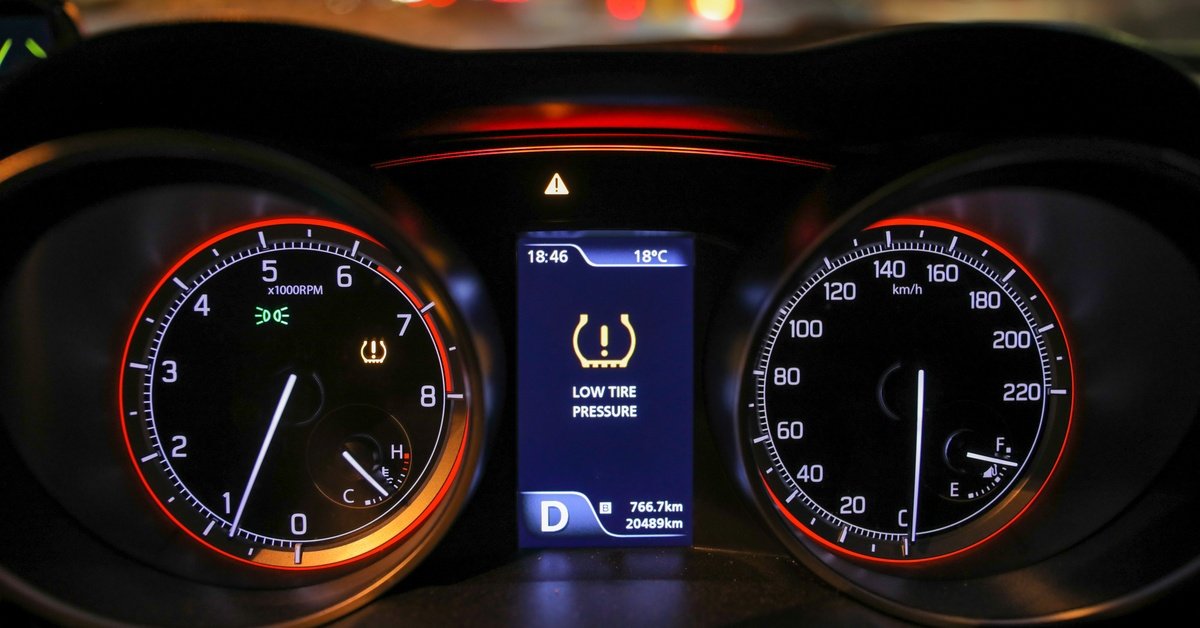
Modern vehicles commonly use a tire pressure monitoring system (TPMS) to warn drivers about significant underinflation. The system provides an important safety alert, but it does not eliminate the need for manual checks.
A tire can fall below the manufacturer’s preferred pressure before the dashboard warning appears. Pressure can also vary among tires without immediately triggering the system.
When the TPMS light illuminates, drivers should check all applicable tires as soon as practical and look for signs of damage or continuing air loss. A tire that repeatedly loses pressure may have a puncture, leaking valve, wheel problem, or another issue that requires attention.
The Number on the Tire Sidewall Is Not Your Target PSI
One common source of confusion is the pressure information molded onto a tire’s sidewall. Drivers should not automatically inflate a tire to that number.
The recommended cold inflation pressure comes from the vehicle manufacturer. Drivers can typically find it on a placard inside the driver’s door area or in the owner’s manual.
Some vehicles specify different pressures for the front and rear tires, so assuming that all four require identical inflation can create another problem. Always use the vehicle’s stated specifications unless the manufacturer provides different instructions for a particular load or operating condition.
Regular Checks Support Safer, More Predictable Driving
Checking inflation requires only a tire pressure gauge and a few minutes. That small routine can reveal pressure loss before it becomes severe, while also helping drivers spot visible tire damage or unusual wear.
A monthly check provides a useful baseline. Drivers should also consider checking before longer trips, after major temperature changes, or when a vehicle suddenly feels different on the road.
Maintaining tire pressure within the manufacturer’s intended parameters supports predictable steering, sensible energy use, and more even tire wear. It also reduces the chance that a pressure problem will become a larger issue.
Air pressure may be invisible, but its effects on a vehicle are not. Keeping tires at their ideal inflation levels remains one of the simplest ways to maintain your car.