Cambodia Bets on Institutional Reform Ahead of 2029 Cutoff
Cambodia is on the clock. With just three years left before the country loses its least developed country status, the government has just received a new blueprint designed to make sure its economy is ready for what comes next.
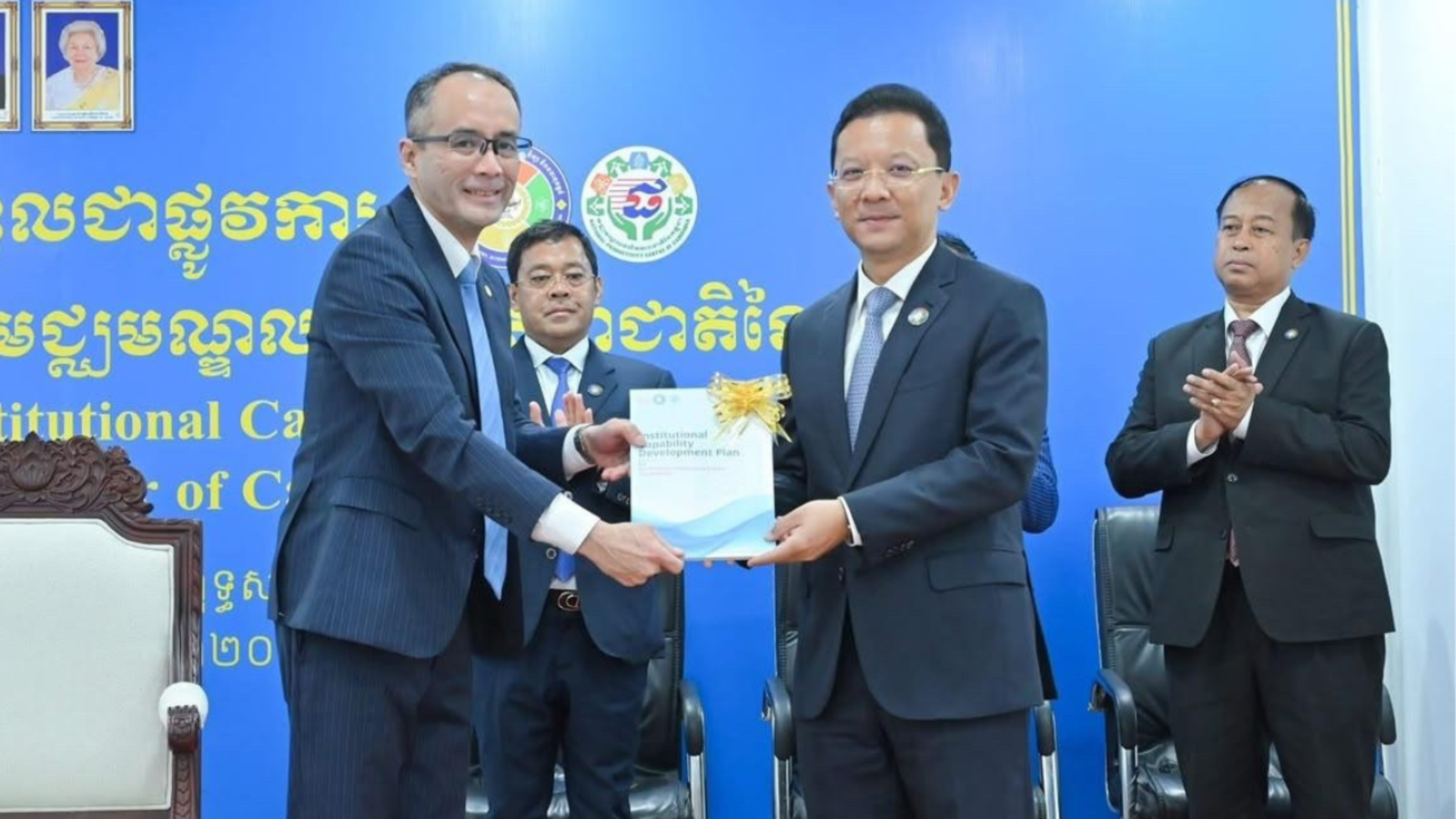
The Royal Government of Cambodia received the Institutional Capability Development Plan for the National Productivity Centre of Cambodia during an official handover ceremony at the Ministry of Industry, Science, Technology and Innovation in Phnom Penh on July 22, 2026. The report was formally handed over by Asian Productivity Organization Secretary-General Dr. Indra Pradana Singawinata to Minister of Industry, Science, Technology and Innovation H.E. Hem Vanndy.
A Blueprint Built for a Ticking Clock
The timing is no coincidence. The handover comes as Cambodia prepares to graduate from least developed country status in 2029, a shift that will require the country to sustain competitiveness through productivity, innovation, digital transformation, green growth, industrial upgrading, and economic resilience without the safety net that comes with LDC status.
That’s where the National Productivity Centre of Cambodia comes in. Developed with APO support, the Institutional Capability Development Plan provides a structured pathway for strengthening the institutional capability of the NPCC, Cambodia’s national productivity institution. It builds on the country’s long-standing engagement with the APO and the APO-supported National Productivity Master Plan developed in 2018, moving beyond strategy development into actual institutional capability building for implementation.
The plan was informed by a diagnostic assessment, stakeholder consultations, and institutional analysis. It recognizes the foundation the NPCC has already built through productivity promotion, capacity building, the 5S Award, and enterprise-oriented initiatives, while identifying the next level of institutional strengthening needed for the NPCC to deliver greater impact.
“The true value of this development plan will depend on implementation. With sustained leadership from MISTI, strong ownership by the NPCC, adequate human and financial resources, effective partnerships, and disciplined monitoring of progress, the NPCC can further strengthen its role as Cambodia’s national productivity institution and make a deeper contribution to the country’s long-term competitiveness, innovation, and prosperity,” said Dr. Indra.
H.E. Hem Vanndy emphasized that the plan would strengthen Cambodia’s productivity ecosystem by enhancing the NPCC’s institutional capacity and its ability to support government agencies, enterprises, and factories in improving productivity, product quality, and operational efficiency. NPCC Director Um Serivuth added that the plan would give the institution a clearer pathway for strengthening its systems, services, partnerships, and results-oriented approach to productivity improvement across Cambodia.
Ten Reform Actions, Three Years to Deliver
The development plan lays out three mutually reinforcing reform categories: strengthening institutional and governance foundations, strengthening organizational systems and human capabilities, and enhancing service effectiveness, stakeholder engagement, and results-based management. Those categories are backed by 10 reform actions and a three-year capability pathway meant to guide the NPCC’s evolution into a more capable, trusted, evidence-driven, and future-ready institution.
The plan is blunt about one thing: productivity improvement cannot be achieved through activity expansion alone. It calls for clearer institutional purpose, stronger governance and management systems, a more demand-responsive service model, deeper technical capabilities, more strategic partnerships, and a shift from simply measuring activities to actually demonstrating productivity results.
Through the plan, the NPCC is expected to strengthen its ability to help firms and public institutions identify productivity constraints, adopt practical solutions, improve service quality, and use evidence to guide continuous improvement. It’s also designed to position the NPCC to respond to emerging priorities like green transformation, digital adoption, industrial upgrading, and enterprise competitiveness — all pressure points Cambodia will need to manage as it exits LDC status.
Dr. Indra expressed appreciation for the leadership and contributions of MISTI, the NPCC, participating ministries, private sector representatives, development partners, and other stakeholders throughout the diagnostic, consultation, validation, and preparation process. He also reaffirmed the APO’s readiness to continue supporting Cambodia through technical cooperation, knowledge exchange, capacity development, and access to regional and international productivity expertise as the plan moves toward implementation.
The APO said it looks forward to continued collaboration with MISTI, the NPCC, and Cambodian stakeholders in advancing productivity-led growth and building institutional capabilities that support the country’s long-term development goals.