BFP Ditches Guesswork for Real-Time 911 Dispatch System
For years, Philippine fire dispatchers were flying blind. Panicked phone calls, dead radio zones and garbled descriptions were all they had to go on when lives hung in the balance. Now, the Bureau of Fire Protection (BFP) has traded that guesswork for live video, precise GPS pins and real-time data streaming straight from the scene, thanks to a sweeping upgrade to the Unified Platform for Communications & Dispatch (UPCAD) system under Unified 911.
The shift marks one of the most significant operational overhauls in the country’s emergency response history, according to Fire Senior Inspector (FSINSP) Jeramile C. Valdez, chief of the Fire Communication Operations Section of the Quezon City Fire District.
From “Completely Blind” to Total Situational Awareness
Before UPCAD, Valdez said, command stations depended entirely on voice-only radio frequencies plagued by poor signals, dead zones and jammed telephone lines. Dispatchers had no choice but to rely on “inaccurate, panic-stricken verbal descriptions from callers,” leaving them, in Valdez’s words, “completely blind” to what was actually unfolding at an emergency scene. Exact locations and shifting ground conditions were essentially guesswork.
That changed when the BFP adopted UPCAD in early 2026. The platform, described as the Philippine government’s next-generation mission-critical technology for emergency response, integrates local 911 call centers directly with field responders, enabling real-time data exchange, multimedia communication and precise geolocation tracking.
“UPCAD transformed our workflow by replacing guesswork with precise, real-time data that significantly cuts down our turnout and response times,” Valdez said. “The platform automatically pins a caller’s exact GPS location while allowing our dispatchers to receive live text, photos, and video feeds directly from the scene before the trucks even roll out. This instant situational awareness allows us to dynamically map out the fastest routes around urban traffic and deploy the exact specialized equipment needed the moment we arrive.”
Breaking Down Agency Walls to Save Critical Minutes
Beyond speeding up individual dispatches, UPCAD’s biggest impact may be how it connects agencies that previously struggled to communicate at all. Valdez said the platform has eliminated the “tedious phone calls” once required to coordinate cross-agency resources like traffic control or city water tankers with the local government unit (LGU) and the City Disaster Risk Reduction and Management Office (CDRRMO).
“Having a wide-coverage, unified network creates a single operational picture that bridges the gap between the BFP, the LGU and disaster response units like the CDRRMO,” Valdez said. “The moment an incident is logged, the LGU’s traffic and security forces are able to see the same data so we can immediately clear gridlocked roads, establish outer cordons, and prepare evacuation shelters ahead of time. This digital interoperability cuts out administrative red tape and allows us to request for heavy city machinery or asset support, directly through the platform, while actively fighting a fire.”
In a message to mayors and DRRMO heads, Valdez framed the upgrade as a matter of life and death. “Upgrading to UPCAD is not just buying software; it is a vital investment in your city’s survival,” he said. “In public safety, every second spent navigating a communication blind spot or a traffic jam directly costs lives and millions in property damage. By bringing the BFP, LGU, and national emergency lines onto a single next-generation platform, you give your frontline responders the exact tools they need to make your community a resilient, data-driven smart city.”
UPCAD now serves as the backend and dispatch engine supporting the existing Emergency 911 National Hotline, reachable toll-free by dialing 911. “By providing precise geolocation and streamlined data sharing, emergency calls are routed and dispatched to the nearest available first responders much faster,” Valdez told LGU officials.
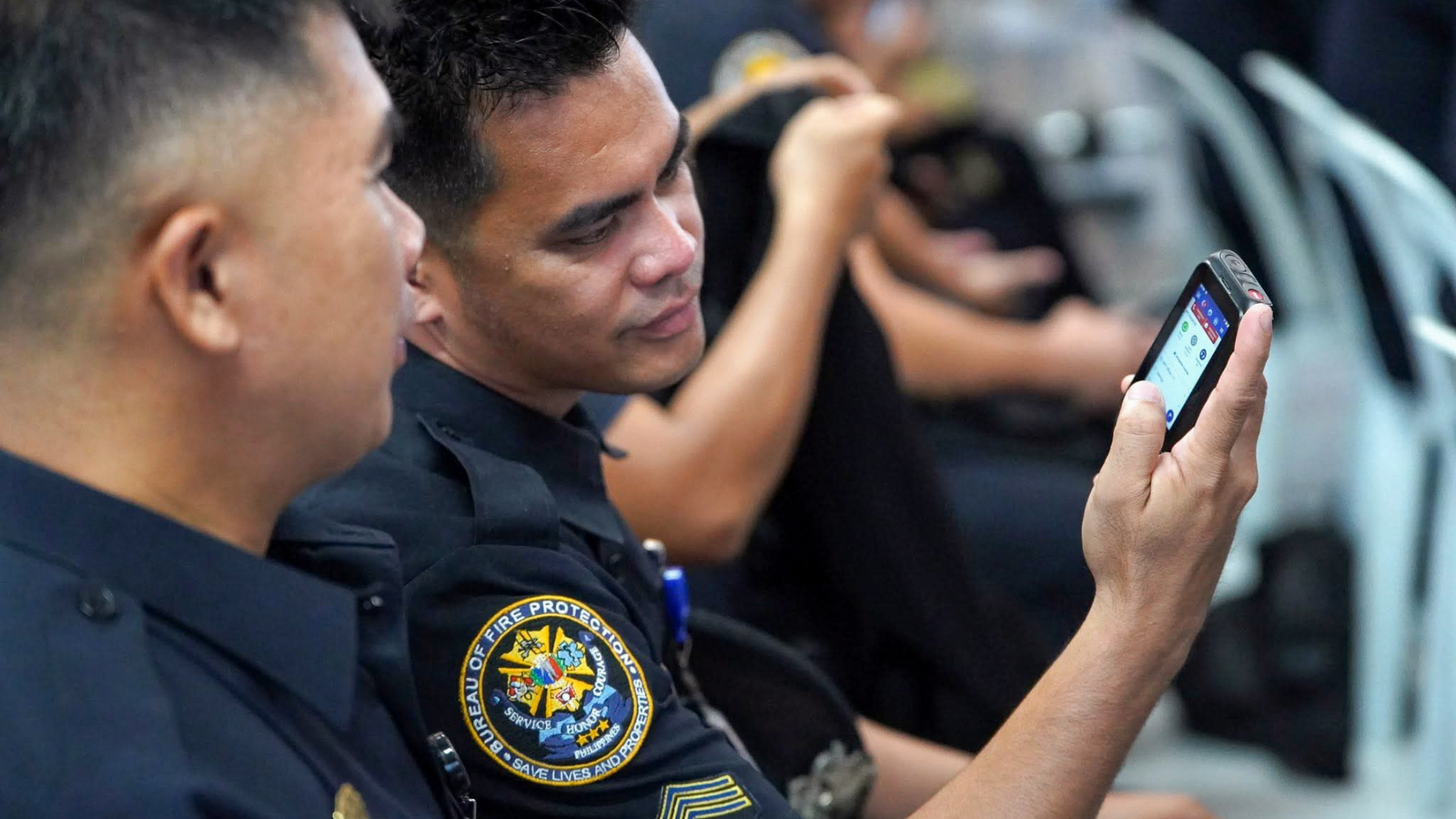
Key features of the system include unified command connecting fire, police and 911 departments through a single communication network; field technology equipping first responders with durable smartphones, feature phones and tablets; and enhanced coordination tools that merge voice collaboration, digital workflows and mission-critical video to ensure vital information isn’t lost during high-pressure crises or natural disasters.
The national rollout of UPCAD, implemented in partnership with the Department of the Interior and Local Government, NGA Philippines and PLDT, launched last January and has since transformed emergency response operations for the BFP, medical services and LGUs nationwide.