ECOWAS, AfDB advance Abidjan-Lagos corridor rollout with board induction
The Economic Community of West African States and the African Development Bank Group moved the Abidjan-Lagos Corridor Highway closer to reality after hosting a two-day induction for the Abidjan-Lagos Corridor Management Authority board in Abidjan.
Held on February 19 and 20, 2026, the orientation marked another operational milestone following the board’s swearing-in during the 22nd Ministerial Steering Committee meeting in December 2025. The session focused on aligning leadership as implementation of the flagship regional project gains momentum.
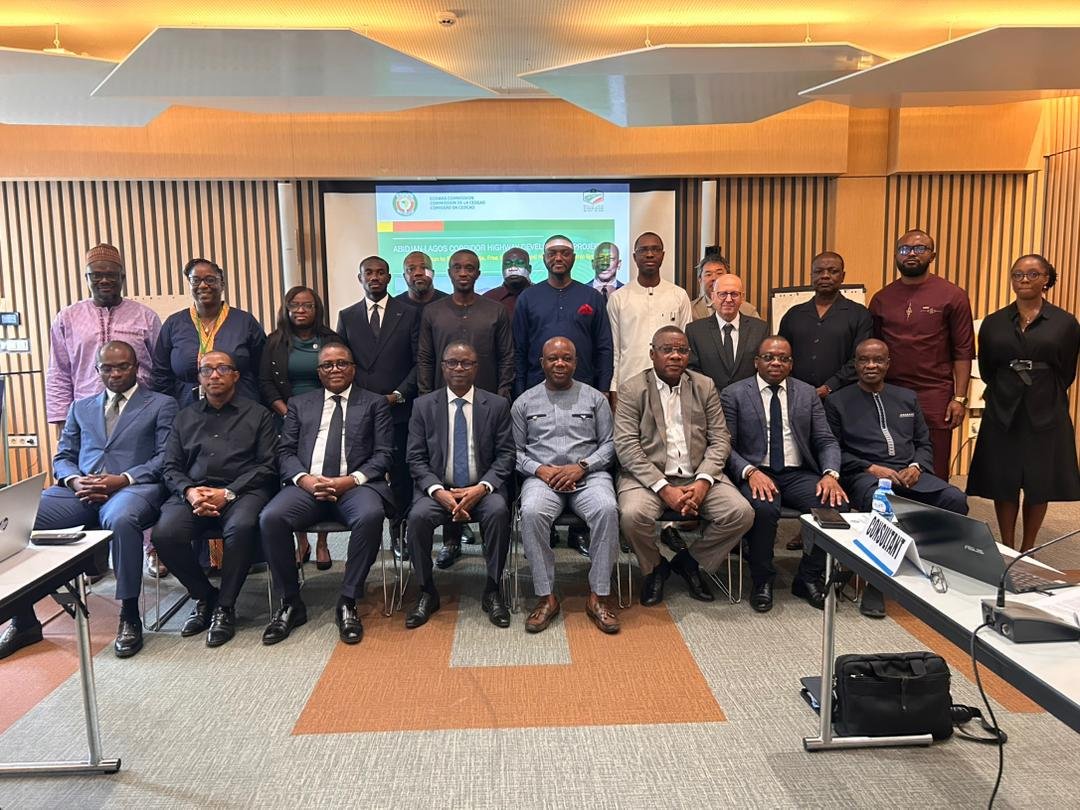
Participants were briefed on the Corridor Treaty, which defines the project’s supranational mandate and long-term strategic goals endorsed by the heads of state of Côte d’Ivoire, Ghana, Togo, Benin and Nigeria. Technical findings and development frameworks were also presented to give board members a comprehensive view of the corridor’s scope.
Board reviews institutional framework
During the sessions, directors examined the legal and institutional architecture guiding the corridor initiative, including intergovernmental agreements and draft instruments establishing both the highway and its governing authority. The board also began reviewing its rules of procedure, charter and the recruitment pathway for key management and technical personnel.
Chris Appiah, ECOWAS Director of Transport, emphasized the corridor’s role as an integrated economic engine that combines infrastructure expansion with trade facilitation and social development. He urged stakeholders to intensify efforts to ensure the project’s timely realization and maximize its regional impact.
Mike Salawou, Director for Infrastructure and Urban Development at the African Development Bank Group, reaffirmed the Bank’s commitment as mandated lead arranger. He noted that the institution would continue working with the ECOWAS Bank for Investment and Development and other partners to mobilize financing support.
Regional impact and financing push
Officials stressed that the corridor is expected to unlock cross-border trade efficiency and stimulate economic activity across the sub-region. Salawou highlighted that citizens across West Africa are counting on the project to ease movement and strengthen commercial connectivity.
As part of the programme, delegates toured a major bridge project in Abidjan that has significantly reduced congestion, particularly in Yopougon, the country’s most populous municipality. The African Development Bank Group mobilized roughly €600 million for the bridge, complemented by support from the Japan International Cooperation Agency and the Global Environment Facility.
Stretching approximately 1,028 kilometers, the Abidjan-Lagos Corridor Highway is envisioned as a transformational transport backbone linking five West African economies by 2030. The African Development Bank Group has already provided technical assistance and $25 million in early-stage funding as feasibility and structuring work approaches completion.