OFW Study: Leadership Action Matters More Than Policy During Overseas Crises
Overseas Filipino Workers are increasingly measuring the strength of the country’s migration governance not through policy frameworks but through how leaders respond during times of crisis. A new study suggests migrant workers place greater trust in visible leadership and decisive action when emergencies unfold abroad.
The research, released Thursday, March 12, by Filipino-focused sociocultural research firm The Fourth Wall, found that migrants evaluate government effectiveness based on service delivery and crisis response rather than bureaucratic mandates. Situations such as armed conflict, emergency evacuations, and large-scale repatriations highlight how leadership visibility influences migrant confidence.
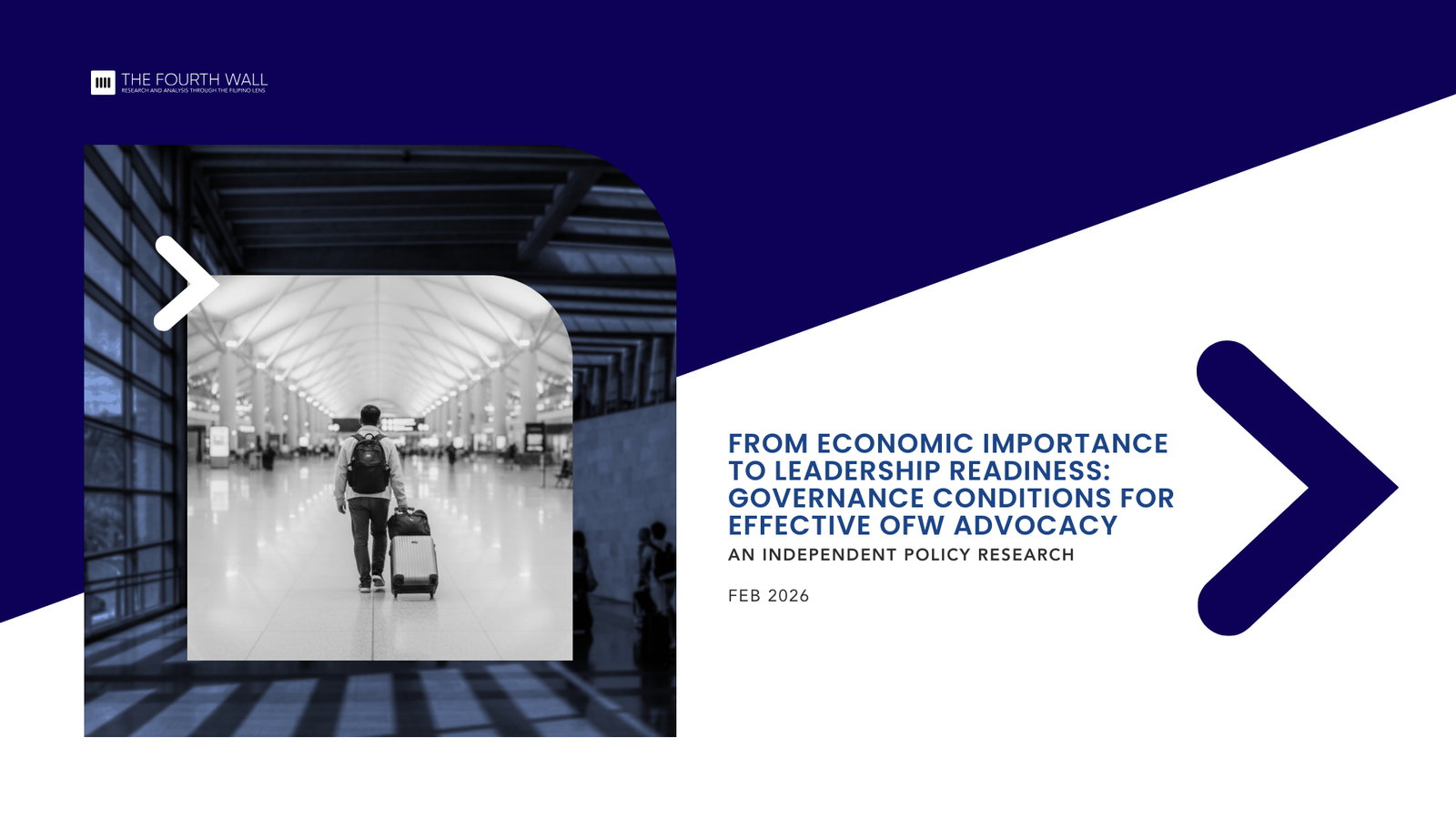
Titled “From Economic Importance to Leadership Readiness,” the study explores the relationship between leadership credibility, institutional performance, and migrant trust in government support systems. Researchers examined how policy structures translate into real-world protection for Filipino workers abroad.
Remittances highlight OFWs’ economic role
Data from the Bangko Sentral ng Pilipinas shows remittances from Overseas Filipino Workers reached $35.63 billion in 2025, representing about 7.3 percent of the Philippines’ gross domestic product. The figures reinforce the role of migrant workers as a central pillar of the national economy.
Despite this massive economic contribution, the study emphasizes that migrant workers do not primarily evaluate governance through policy design. Instead, they judge the system based on how effectively government services respond to their needs and challenges abroad.
The Philippines has developed one of the world’s most comprehensive migration governance frameworks. The establishment of the Department of Migrant Workers created a centralized system designed to manage the migration process from recruitment and deployment to reintegration.
However, the research identifies a clear disconnect between policy structures and migrant experience. Workers abroad often encounter delays in documentation, slow response times from hotlines, and coordination challenges during emergencies.
“Our findings show a clear trend. When documentation is slow, when hotlines are unresponsive, or when agencies fail to coordinate during an emergency, migrants don’t turn to administrative complexity but to national leadership,” said John Brylle L. Bae, research director at The Fourth Wall.
“In the eyes of the OFWs, the quality of their service signals their government’s priorities,” he added.
Leadership visibility during global crises
The study notes that gaps between policy and service become more visible during periods of geopolitical tension, particularly in regions with large Filipino populations such as the Middle East. In volatile environments, migrant workers expect their government to respond with speed, clarity, and visible leadership.
Researchers found that OFWs often look for credible champions who can mobilize institutions quickly and visibly when workers face danger abroad. Leaders who can coordinate agencies and deliver assistance effectively are seen as critical during crisis situations.
According to the report, the Philippines already has much of the institutional infrastructure needed to support migrant workers. What determines success now is the discipline and coordination involved in executing those policies.
Leadership is described as the coordinating force that allows multiple government agencies to function as a unified protection system. When institutions act cohesively, the migration governance framework becomes a functional shield for workers overseas.
The study analyzed public discourse, OFW narratives, and migrant service experiences to identify patterns in how workers perceive government support. Findings show that migrants associate credible leadership with reliable service delivery, strong cross-agency coordination, and visible responsiveness during distress situations.
Researchers also identified representational legitimacy as an important expectation among migrant workers. Many OFWs prefer leaders who understand the lived realities of working abroad and who can credibly represent migrant concerns.
Empathy and familiarity with migrant life are seen as essential qualities that enable leaders to implement reforms within the migration system. These traits help strengthen trust between migrant communities and the institutions designed to protect them.
The Fourth Wall concludes that improving migration governance does not necessarily require expanding mandates or increasing the size of government bureaucracy. Instead, the report suggests strengthening the reliability and coordination of existing institutions.
Policy considerations outlined in the study include improving coordination among migration-related agencies, expanding accessibility of OFW assistance channels, simplifying documentation procedures across agencies, and strengthening support systems across overseas posts.
The report also recommends enhancing reintegration pathways for returning workers so they can successfully transition back into the Philippine economy. These improvements aim to ensure that migration policy translates into real protection and assistance for workers abroad.
“Migration has become a structural pillar of the country’s economy,” Bae said. “Leadership readiness is not an abstract quality but a governance function that determines whether migration policy translates into timely protection and support for Filipino workers abroad.”