Amazon Ring AI security cameras raise privacy concerns despite enhanced features
Amazon has expanded its Ring ecosystem with AI-driven capabilities designed to improve proactive home security, announced at CES 2026. The new features aim to move beyond standard motion detection, enabling cameras to learn daily property patterns and flag unusual activity.
However, a recent Surfshark study casts a shadow over these upgrades, ranking Ring cameras as top data collectors among smart home devices. The research highlights that the devices gather biometric data, location details, contact information, and more, prompting cybersecurity experts to caution that personal privacy is being traded for convenience and security.
AI tools promise smarter security
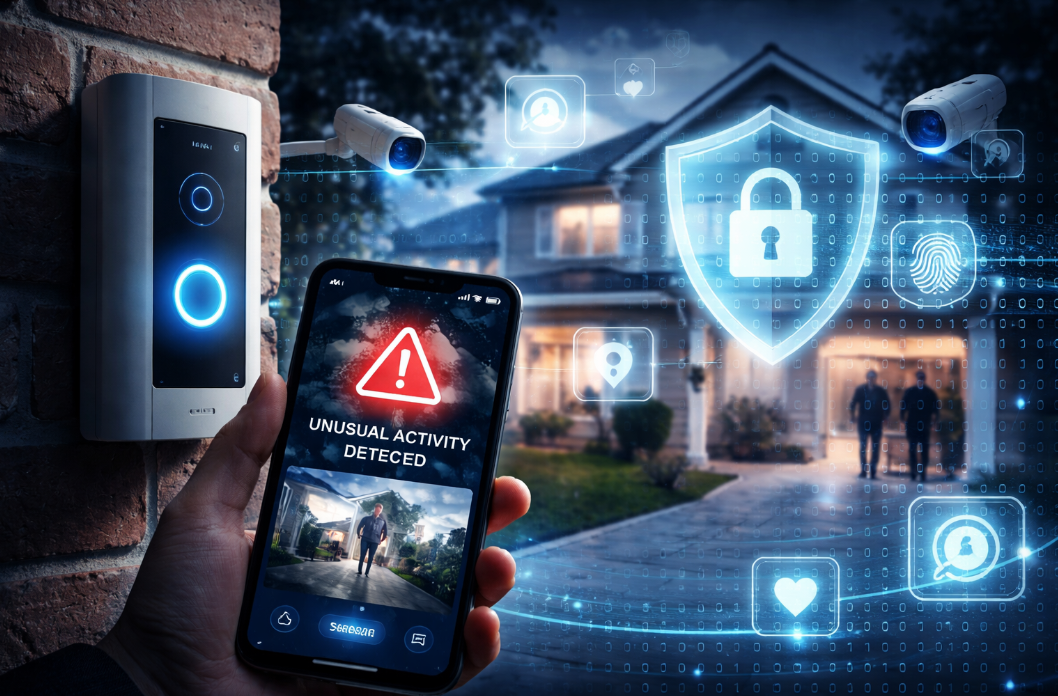
Amazon introduced “AI Unusual Event Alerts,” a feature that analyzes historical patterns to distinguish between normal and abnormal activity on a property. The system can issue warnings based on location, actions, and even clothing, allowing Ring cameras to provide what Amazon calls “intelligent context awareness.”
According to the company, these AI enhancements are meant to reduce false alarms while delivering a more sophisticated security experience. Users can expect alerts tailored to unusual behavior rather than simple motion, effectively upgrading Ring from standard surveillance to predictive monitoring.
Privacy risks spark concern
Despite these benefits, Surfshark warns that AI-powered security comes with major privacy trade-offs. Miguel Fornes, a Surfshark cybersecurity expert, explains that compromised cameras can expose live feeds of users and neighbors, noting that unpatched vulnerabilities are common and often overlooked.
“Collecting every ‘normal’ moment of your life to flag anomalies creates a massive privacy hazard,” Fornes said. Metadata about routines, movements, and clothing can be exploited if a feed is hacked, turning the security device into a breach itself.
Some jurisdictions have already restricted Amazon’s AI tools. Features like Familiar Faces are blocked in Illinois, Texas, Quebec, and the EU due to strict biometric and GDPR regulations. Certain EU countries also require explicit permission from neighbors when installing door cameras that record shared spaces.
The Surfshark study also found that Ring’s companion apps gather personal information beyond what is necessary for security. Data grouped under “Other Purposes” obscures the extent and rationale of tracking, leaving users with little clarity about how their information is being used.
For the complete research material behind this study, visit here.