How Equateur province turned the tide against mpox in DR Congo
In Mbandaka, the capital of Equateur province in the Democratic Republic of Congo, health workers at the Mama wa Elikya centre endured months of fear as mpox cases steadily increased. Each new patient brought uncertainty, testing the resolve of caregivers on the front lines.
Among them was Monique Mulo Itala, a registered nurse and mother of five. For the 50-year-old, the outbreak forced a painful balance between professional responsibility and fear of exposing her family to the virus.
Monique recalled being afraid to enter the isolation ward, even while wearing protective gear. She said the fear followed her home, where she kept her distance from loved ones to avoid the risk of infection.
Mpox was declared a public health emergency of international concern by the World Health Organisation on Wednesday, Aug. 14, 2024. The decision followed a surge in cases across the Democratic Republic of Congo.
Between January and November 2024, the country recorded 8,517 suspected cases, 1,439 confirmed infections and 417 deaths. Equateur province emerged as one of the hardest-hit regions.
Containing a fast-moving outbreak
During the same period, Equateur reported 1,262 confirmed cases and 374 deaths, accounting for more than a third of the national total. Health facilities struggled to cope with the volume of patients and limited resources.
Monique said her centre treated nearly 200 cases, many involving patients who showed few visible symptoms. Despite the risks, staff continued isolating patients, providing care and promoting hygiene while waiting for vaccines.
Support arrived through an international response led by the African Development Bank and the World Health Organisation in partnership with the Congolese government. From January to July 2025, the intervention focused on strengthening mpox control in Equateur province.
The effort was funded through a $1 million grant from the Bank’s Special Relief Fund under the Emergency Assistance Project to Combat Simian Smallpox. It targeted frontline health workers, high-risk populations, children and people with close contact to wildlife.
Four priorities guided the response: early diagnosis, vaccination, infection prevention and improved coordination across sectors. These measures quickly changed the trajectory of the outbreak.
Vaccination brings relief and resilience
By October 2025, all newly suspected cases were being rapidly confirmed through laboratory testing, treated promptly and followed by systematic vaccination of contacts. The integrated approach led to a sharp decline in infections and deaths.
Confirmed mpox cases in Equateur province have dropped by 60 percent, with only 14 deaths recorded so far in 2025. This compares with 417 deaths during the same period in 2024.
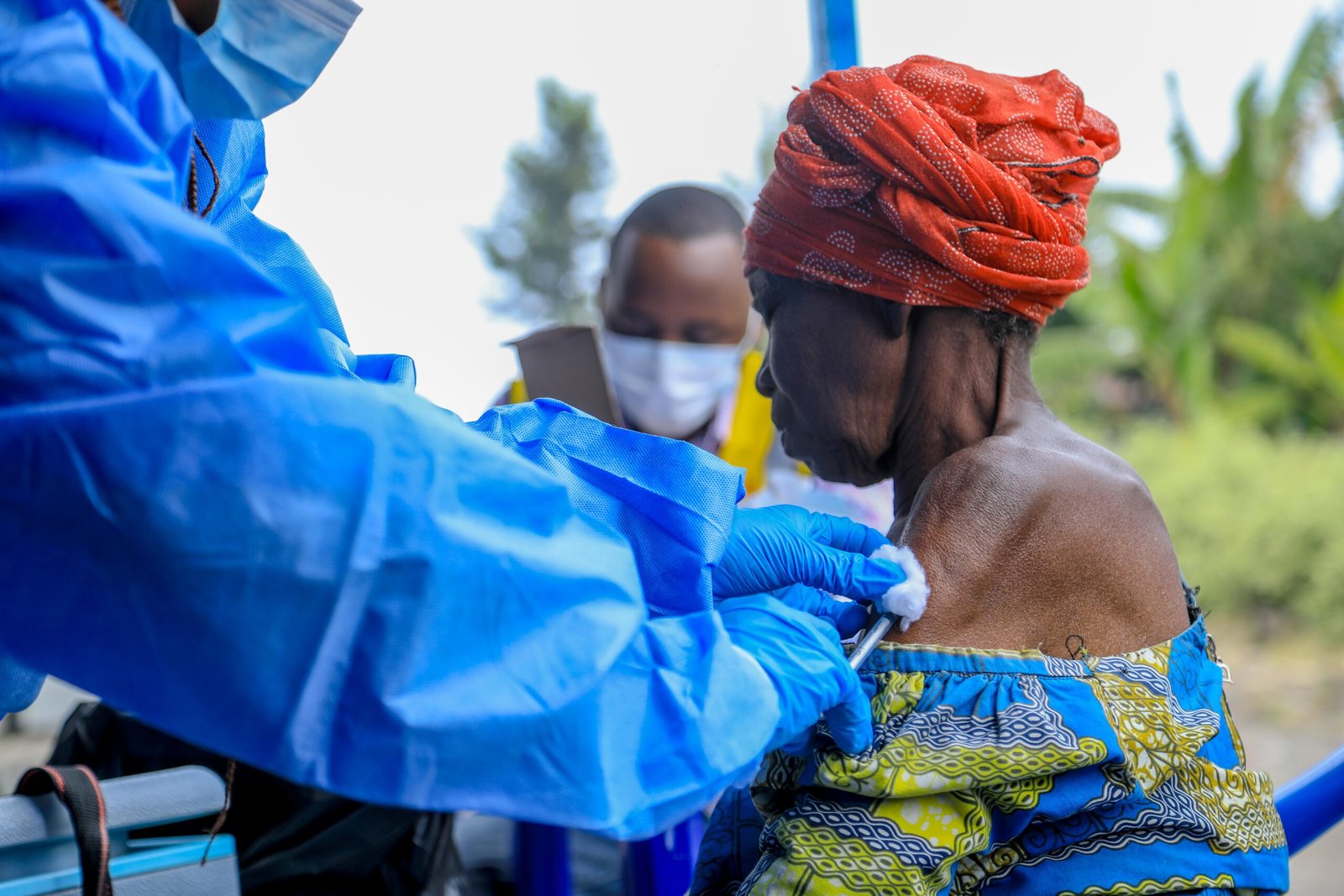
For Monique, the arrival of vaccines marked a turning point. She said vaccination protected health workers and their families, easing the fear that once defined their daily work.
More than 1,406 people have been vaccinated in Equateur province, including thousands of frontline staff. Outreach teams also reached more than one million people through community engagement, helping to counter misinformation and promote prevention.
The response strengthened the broader health system. Laboratories in Mbandaka, Ingende and Bikoro were upgraded, thousands of prevention kits were distributed and diagnostic capacity was expanded with GeneXpert technology.
Monique noted that her centre also used the opportunity to vaccinate children who had previously missed routine immunisations. Of 100 children identified, 88 were successfully vaccinated.
Today, Equateur province is better prepared for future outbreaks, with stronger facilities, trained personnel and informed communities. For health workers like Monique, fear has given way to confidence and hope.
She said the message to communities is now clear: vaccination is protection, pride and an act of care for oneself and others.